📖 Syllabus
Key features of utilitarianism
What ‘good’, ‘bad’, ‘right’ and ‘wrong’ mean for a utilitarian
You need to explain how utilitarians define these key moral terms in terms of happiness, pain and overall results.
What ‘utility’ is and what it means to ‘maximise’ it
You need to understand what ‘utility’ means and what it means to choose the action that creates the greatest overall good.
Bentham’s version: measuring pleasure (‘utility calculus’)
You need to know Jeremy Bentham’s quantitative approach and his ‘hedonic’ or ‘utility’ calculus for measuring pleasure and pain.
Mill’s version: higher and lower pleasures and his ‘proof’
You need to know John Stuart Mill’s idea of higher and lower pleasures, and his attempt to prove that happiness is the ultimate good.
Utility without pleasure: non-hedonistic and preference utilitarianism
You need to know versions of utilitarianism that focus on more than pleasure, especially preference utilitarianism.
Act and rule utilitarianism
You need to understand the difference between judging each individual action (act utilitarianism) and following rules that maximise happiness in general (rule utilitarianism).
Problems with utilitarianism
Problem 1: is pleasure the only good thing?
You need to explain and use Nozick’s ‘experience machine’ to challenge the idea that only pleasure matters.
Problem 2: fairness and individual rights
You need to understand how utilitarianism can allow a ‘tyranny of the majority’, where the happiness of many overrides the rights of a few.
Problem 3: calculation and who counts in the calculation
You need to explore whether we can really calculate the greatest good, and who or what we should include, such as animals and future generations.
Problem 4: partiality and special obligations
You need to examine whether utilitarianism is too impartial and ignores our special duties to family and friends.
Problem 5: intentions and moral characterYou need to understand the criticism that utilitarianism ignores a person’s intentions and moral character, and focuses only on outcomes.
🤔 Subject notes
These notes related directly to the syllabus subject matter.
1. What is utilitarianism?
1.1 Moral philosophy and normative ethics
Ethics is also known as moral philosophy. It is the branch of philosophy that studies morality, including ideas like right and wrong, good and bad.
Within ethics, there is a field called ‘normative ethics’. This is the branch you are studying. It is not interested in describing how people happen to behave. That task belongs to ‘descriptive ethics’. Normative ethics provides a framework for deciding what actions are morally right or wrong. It gives guidelines on how people ought to act.
Consequentialism is one of the main types of normative ethical theory. It is the view that morality is based on the outcomes or consequences of actions.
Utilitarianism is the most famous example of a consequentialist normative ethical theory.
1.2 The basics of utilitarianism
Utilitarianism is a family of normative ethical theories and a version of consequentialism.
Its core idea is that the consequences of an action are the only standard of right and wrong. The theory is based on one main instruction: the principle of utility.
This principle states that we should always act to produce ‘the greatest good for the greatest number’. For a utilitarian, the purpose of morality is to make life better. We do this by increasing the amount of ‘good things’ in the world, such as pleasure and happiness, and by decreasing ‘bad things’ such as pain and unhappiness.
Utilitarianism rejects moral codes that are based only on tradition, custom, or orders from a leader or supernatural being. Instead, an action is morally true or justifiable only because of its positive contribution to human (and possibly animal) well-being.
1.3 How utilitarianism defines ‘good’, ‘bad’, ‘right’ and ‘wrong’
This is a central part of the syllabus. For a utilitarian, the definitions are clear:
- ‘Good’: an action is good if it increases happiness, pleasure, or well-being.
- ‘Bad’: an action is bad if it increases pain or unhappiness.
- ‘Right’: a right action is the specific action that maximises this good. It is the choice that produces the best possible consequences for all individuals affected.
- ‘Wrong’: a wrong action is one that fails to produce the best possible consequences.
This definition of ‘right’ reveals a core feature of utilitarianism: it is impartial and agent-neutral.
The theory demands that we calculate the total or aggregate good. In this calculation, everyone’s happiness counts equally. My happiness is no more important than a stranger’s happiness.
While this seems fair, it has a major consequence.
The theory will often clash with our common-sense intuition that we should be partial to our family and friends. This becomes a major problem, which we will explore in section 4.4.
2. Understanding ‘utility’
2.1 What is ‘utility’?
The word ‘utility’ means the usefulness of an action.
For a utilitarian, this means the usefulness of an action in promoting happiness or pleasure and reducing pain or suffering.
For the ‘classical’ utilitarians, Jeremy Bentham and John Stuart Mill, ‘utility’ is simply pleasure and the absence of pain. This specific view is called hedonism.
Hedonism is the view that pleasure is the only thing that is intrinsically valuable. This means pleasure is the only thing that is ‘good in itself’. Other things, like money, health, or friendship, are only instrumentally valuable. They are good as a means to an end. They are only good because they lead to pleasure.
2.2 What does it mean to ‘maximise utility’?
‘Maximising utility’ means choosing the action that produces the greatest overall good.
It is not enough just to produce some good. The action must produce the most good available. This involves calculating the total amount of happiness for everyone affected by the action. We then pick the option with the highest ‘net’ happiness. Net happiness means total pleasures minus total pains. It is about the aggregate, or total, sum of utility.
The word ‘maximise’ is the source of one of the biggest criticisms of utilitarianism: the ‘demandingness objection’. If morality requires us always to choose the action that creates the maximum possible good, then any other action is, by definition, morally wrong.
For example, imagine you buy a doughnut or a magazine.
This action is not the ‘maximal’ act. You could have donated that money to a charity that would use it to save a life. Because the donation produces more utility, the utilitarian must say that buying the doughnut was morally wrong. This theory is so demanding that it seems to make everyday life and simple pleasures immoral.
3. What are the main types of utilitarianism?
3.1 Hedonistic (pleasure-based) utilitarianism
This is the view that the ‘good’ to be maximised is pleasure.
The two main hedonistic utilitarians are Jeremy Bentham and John Stuart Mill.
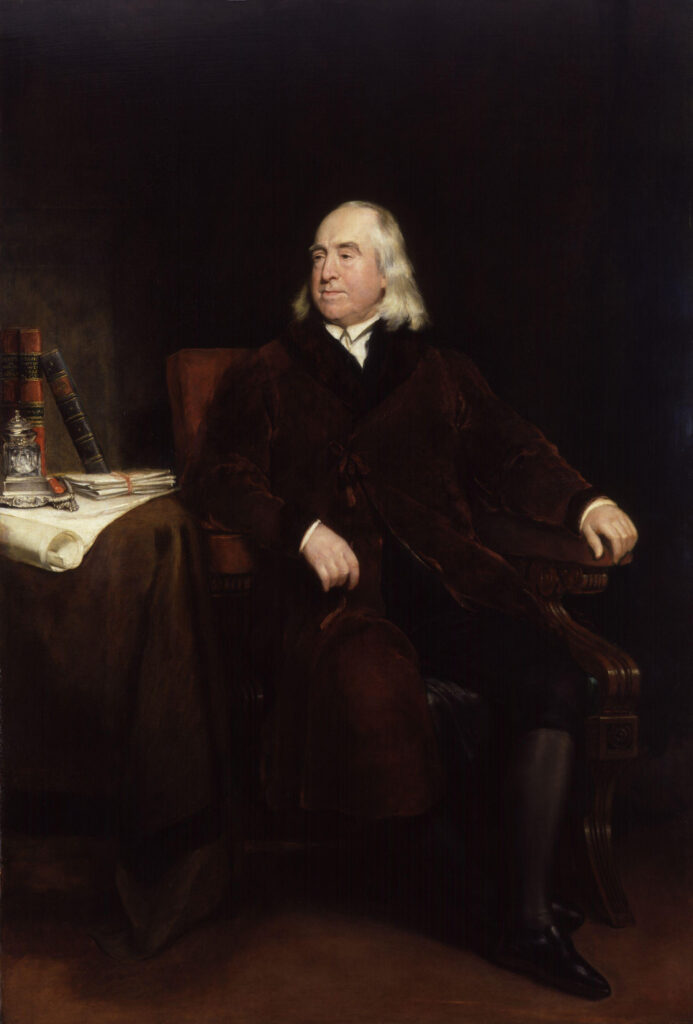
3.1.1 Jeremy Bentham: quantitative utilitarianism
Jeremy Bentham (1748–1832) is often considered the ‘father’ of modern utilitarianism.
His key belief was that “Nature has placed mankind under the governance of two sovereign masters, pain and pleasure”. He argued that these ‘masters’ are the only things that can tell us what we ought to do.
Bentham’s theory is quantitative. This means the only thing that matters is the amount, or quantity, of pleasure. For Bentham, all pleasures are equal in kind. This makes his view highly egalitarian. The pleasure of drinking a beer is, in itself, no better or worse than the pleasure of reading a poem.
3.1.2 Bentham’s ‘utility calculus’
To support his quantitative theory, Bentham developed the ‘utility calculus’, also known as the ‘hedonic calculus’ or ‘felicific calculus’.
This is a method for calculating how much pleasure or pain an action will produce. It was an attempt to make ethics more scientific.
The calculus has seven factors:
- Intensity: how strong is the pleasure?
- Duration: how long will it last?
- Certainty: how likely is it to happen?
- Propinquity (or remoteness): how soon will it happen?
- Fecundity: how likely is it to lead to more pleasures?
- Purity: how free from pain is it, or how unlikely is it to be followed by pain?
- Extent: how many people will be affected by it?
To find the right action, a utilitarian would, in theory, calculate the scores for all seven factors, for every person affected (extent), for every possible action. The action with the highest total score would be the morally right one.
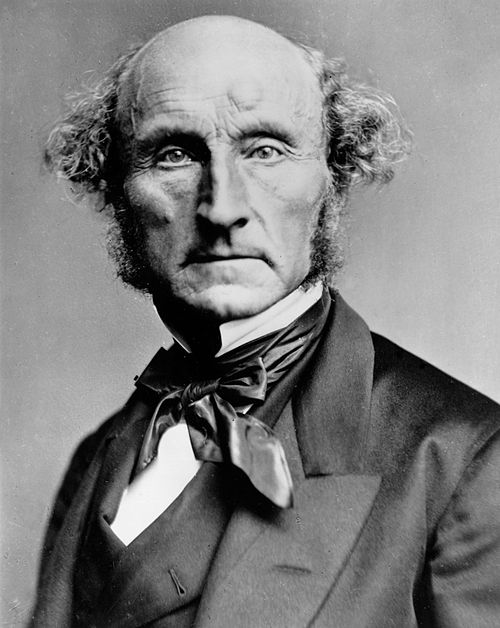
3.1.3 John Stuart Mill: qualitative utilitarianism
John Stuart Mill (1806–1873) was a follower of Bentham who wanted to defend utilitarianism from criticism.
The main criticism was that Bentham’s theory was a “doctrine worthy only of swine”. Critics argued that, by making all pleasures equal, Bentham’s theory degraded humans to the level of animals.
Mill’s solution was to introduce qualitative distinctions.
He argued that the quality of pleasure matters, not just the quantity.
3.1.4 Mill’s ‘higher’ and ‘lower’ pleasures
This is Mill’s key concept, and a core part of your syllabus.
- Lower pleasures: these are pleasures of the body, such as sensual and physical pleasures. Both humans and animals can experience them. Examples include eating, sleeping, and sex.
- Higher pleasures: these are pleasures of the mind, such as intellectual, moral, imaginative, or emotional pleasures. Mill argued these are unique to humans because we have ‘higher faculties’. Examples include reading poetry, studying philosophy, or appreciating art.
Mill made this distinction famous with the quote: “It is better to be a human being dissatisfied than a pig satisfied; better to be Socrates dissatisfied than a fool satisfied”.
His point is that the dissatisfied human (or Socrates) has access to higher pleasures. This makes their life better, even if it comes with dissatisfaction. The satisfied pig (or fool) is only content because they are ignorant of the higher pleasures.
How do we know which pleasures are higher? Mill says we must ask a ‘competent judge’. This is someone who has fully experienced both types of pleasure. Mill claims that any such judge would always prefer the higher pleasure over any quantity of the lower pleasure.
3.1.5 Mill’s ‘proof’ of the greatest happiness principle
Mill attempted to ‘prove’ that happiness is the one and only thing desirable as an end. His proof, simplified, has three stages:
Stage 1:
The only evidence that something is visible is that people actually see it. By analogy, Mill argues, the only evidence that something is desirable is that people actually desire it.
Each person desires their own happiness. Therefore, each person’s happiness is desirable, or good, to that person.
Stage 2:
Since each person’s happiness is a good to that person, the general happiness, meaning the sum of everyone’s happiness, must be a good to the group as a whole.
Stage 3:
People do desire other things, like virtue or knowledge, ‘for their own sake’. But Mill argues they only desire these things because they are part of what makes them happy. Therefore, happiness is the only intrinsic good.
This proof is famously flawed, and you should be able to criticise it.
Criticism 1: the naturalistic fallacy
Mill confuses two different meanings of the word ‘desirable’.
He moves from ‘desirable’ meaning ‘capable of being desired’ (an ‘is’ statement) to ‘desirable’ meaning ‘worthy of being desired’ (an ‘ought’ statement). Just because people do desire something, such as revenge or junk food, does not make it good or worthy of desire.
Criticism 2: the fallacy of composition
Mill makes a leap in logic. Just because each person desires their own happiness, it does not logically follow that each person desires the general happiness.
3.1.6 Key differences between Bentham and Mill
View of pleasure
- Bentham: quantitative. Only the amount of pleasure matters. “All pleasures are equal.”
- Mill: qualitative. The kind of pleasure matters. Higher pleasures of the mind are superior.
Key principle
- Bentham: “The greatest pleasure for the greatest number.”
- Mill: “The greatest happiness for the greatest number”, distinguishing happiness from mere contentment.
Method
- Bentham: the ‘utility calculus’, a seven-step process to quantify pleasure.
- Mill: the ‘competent judge’, a person who has experienced both higher and lower pleasures.
Typical link
- Bentham: act utilitarianism, which judges each act case by case.
- Mill: rule utilitarianism, which judges acts by their conformity to utility-based rules.
3.2 Non-hedonistic utilitarianism
This syllabus point covers versions of utilitarianism that are not based only on pleasure.
Non-hedonistic utilitarians agree that we should maximise utility, meaning we should focus on consequences. However, they argue that ‘utility’ is not just pleasure. They believe other things are also intrinsically valuable, such as well-being, autonomy, friendship, knowledge, or aesthetic appreciation.

3.2.1 Preference utilitarianism
This is the main form of non-hedonistic utilitarianism you need to know.
Definition: the right action is the one that maximises the satisfaction of preferences, or ‘interests’, for the greatest number. The ‘good’ to be maximised is ‘preference-satisfaction’.
This theory was developed as a response to the flaws in hedonistic utilitarianism. The ‘experience machine’ (see 4.1.1) is a major problem for hedonism, as it seems to require us to plug in.
Preference utilitarianism ‘wiggles out’ of this problem. It can say that we should not plug in, because we have a strong preference to live in the real world.
This theory argues that our preference for reality should be respected, even if it means experiencing less pleasure. It also better accounts for people who have preferences that do not increase their pleasure, such as a monk who prefers an ascetic (simple) life.
3.3 Act versus rule utilitarianism
This is the final major division in the theory, as given in the syllabus.
This is a different split from the one above. A utilitarian can be an act hedonist (like Bentham) or a rule hedonist (like Mill). The distinction is about how we apply the principle of utility. Do we judge individual actions, or do we judge general rules?
3.3.1 Act utilitarianism (judging the act)
Definition: an action is morally right if and only if that specific act produces at least as much happiness as any other act the person could perform at that time.
It applies the principle of utility on a case-by-case basis.
This is typically associated with Bentham.
Moral rules, such as ‘do not lie’, are just rules of thumb. An act utilitarian must break the rule if, in that specific situation, breaking it produces more good.
3.3.2 Rule utilitarianism (judging the rule)
Definition: an action is right if it follows a moral rule that, if generally followed, would produce the greatest happiness for society.
This is typically associated with Mill.
It is a two-step process:
- We first decide which rules, such as ‘always tell the truth’ or ‘keep your promises’, create the most happiness.
- We then follow those rules, even in specific cases where breaking the rule might seem to create more good.
Simple example: consider a traffic light at 3 a.m. An act utilitarian might run the red light if no one is around. There are no bad consequences and it saves time. A rule utilitarian would wait. The rule ‘always stop at red lights’ is a good rule that maximises utility for society by preventing crashes and maintaining order. We must follow the rule, not judge each individual act.
Rule utilitarianism was developed as a direct attempt to solve the major problems of act utilitarianism. Act utilitarianism is criticised for approving actions that seem clearly wrong, such as the ‘tyranny of the majority’ (see 4.2.2), and for undermining trust.
Rule utilitarianism claims to avoid these flaws.
A rule utilitarian would not frame an innocent person to stop a riot.
Why not? Because the rule ‘do not frame the innocent’ is vital for the long-term good of society. The long-term pain from a corrupt justice system would far outweigh the short-term gain.
However, rule utilitarianism faces its own major criticism: it ‘collapses’.
- If the rules are absolute, such as ‘never lie’, then the theory is no longer consequentialist. It has become a deontological, rule-based theory.
- If the rules have exceptions, such as ‘never lie, unless it saves a life’, then you are back to judging the consequences of the act to see if the exception applies. In that case, the theory collapses back into act utilitarianism.
4. Key issues and criticisms
This section covers the five major problems listed on the syllabus.
4.1 Is pleasure the only good?
This is the problem for hedonistic utilitarianism.
The problem: hedonism, the basis of Bentham’s and Mill’s theories, claims that pleasure is the only intrinsic good.
This is challenged by the idea that we value other things intrinsically, such as truth, reality, and personal achievement.

4.1.1 Nozick’s experience machine
This is the key thought experiment for this syllabus point.
The experiment, devised by Robert Nozick, asks you to imagine a machine you can plug into for life.
This machine would give you any experience you desire, creating a perfect life filled with maximum pleasure.
You would be floating in a tank, but in your mind you would be achieving everything you ever wanted.
You would not know it was a simulation.
The key question: would you choose to plug in?
Nozick’s argument:
- If hedonism is true, and pleasure is the only good, then we would all have an overriding reason to plug in.
- However, Nozick believes, and most people agree, that we would not choose to plug in.
- This is because we value other things besides pleasure. We want actually to do things, not just have the experience of doing them. We want to be a certain type of person, such as courageous or kind. We value being in contact with reality.
- Conclusion: therefore, hedonism is false. Pleasure is not the only good.
Utilitarian response:
This is a strong attack on hedonistic utilitarianism, especially Bentham and Mill. However, as noted in 3.2.1, preference utilitarianism survives. It can say we should not plug in because we have a strong preference to live in reality, and this preference should be satisfied.
4.2 Is utilitarianism fair?
The problem: utilitarianism focuses on the total or aggregate good, not on how that good is distributed. This can lead to sacrificing the rights and liberties of individuals or minorities for the sake of the majority’s happiness. Bentham himself famously dismissed the idea of ‘natural rights’ as “nonsense upon stilts”.
4.2.1 Fairness and individual rights
4.2.2 The ‘tyranny of the majority’
These two syllabus points are often combined as they address the same core issue.
Definition: the ‘tyranny of the majority’ is a scenario where an action is considered moral by utilitarianism because it maximises pleasure for a large group, even though it is deeply unfair and violates the rights of a minority.
Key example 1: torture
If ten people get one unit of pleasure each (total +10) from torturing one person who experiences nine units of pain (total −9), the net utility is +1.
Act utilitarianism would seem to require this action.
Key example 2: the sheriff
A sheriff knows a man is innocent, but an angry crowd is forming and will kill many people unless the man is framed and executed.
The act utilitarian calculation, comparing one death with many deaths, requires the sheriff to frame the innocent man.
Key example 3: the organ donor
A doctor has five patients who will die without transplants.
A healthy person wanders into the hospital.
The act utilitarian calculation, comparing killing one vs saving five, seems to require the doctor to kill the healthy person and harvest their organs.
The criticism: these actions are clearly morally wrong.
They show that utilitarianism’s focus on consequences ignores justice and individual rights, which many people feel are absolute.
Utilitarian response (rule utilitarianism):
As noted in 3.3.2, rule utilitarianism claims to solve this. A rule utilitarian would not kill the patient or frame the innocent man. Why not? Because the rules ‘doctors must not kill patients’ and ‘do not frame the innocent’ are essential for the long-term happiness of society.
If these rules were broken, the collapse of trust in doctors and the justice system would cause massive long-term pain, which would far outweigh the short-term pleasure.
4.3 Problems with calculation
The problem: the entire theory rests on our ability to calculate the consequences of our actions, but this seems practically impossible.
4.3.1 Can we predict consequences?
We cannot know the future. An action that looks good now might have terrible long-term consequences.
Example: you save a drowning child. This seems to produce good utility.
But what if that child grows up to be a dictator who kills millions of people? Was your ‘good’ act actually morally wrong?
It is also hard to compare different pleasures. How do we quantify the pleasure of reading a poem versus the pleasure of eating a cake?
The numbers seem arbitrary.
4.3.2 Which beings should we include?
This is a key calculation problem from the syllabus.
When we calculate the ‘greatest number’, who, or what, counts?
Animals:
Bentham famously said, ‘The question is not, Can they reason? nor, Can they talk? but, Can they suffer?’ If an animal can suffer, its pain must be included in the calculation. This has major implications for eating meat and for animal testing. How do we weigh a pig’s pain against a human’s pleasure from eating bacon? Preference utilitarians like Peter Singer extend ‘personhood’ to some non-human animals based on this idea.
Future generations:
Do we include people who are not yet born? This is vital for environmental ethics. A utilitarian might argue that we must sacrifice our pleasure, such as by reducing the use of fossil fuels, for the sake of the happiness of future generations.
Average vs total:
A related problem is whether we should aim for total happiness or average happiness. Is a world with ten billion mildly happy people better than a world with one billion extremely happy people? The calculation is unclear.
4.4 The problem of partiality
The problem: as noted in 1.3, utilitarianism is radically impartial.
It demands that we treat the happiness of a stranger as equal to the happiness of our own family.
The criticism: this conflicts with our deep moral intuition that we have special obligations to those we have relationships with, such as family and friends.
Key example (the life raft or burning building):
You are in a burning building, or on a sinking life raft, and can only save one person.
Person 1: your mother.
Person 2: a brilliant scientist who is confident they can find the cure for cancer.
The utilitarian calculation:
The scientist will go on to save millions, producing far more utility.
Your mother will only produce an average amount of utility.
The impartial calculation requires you to save the scientist and let your mother die.
The criticism: most people find this morally abhorrent.
It suggests that utilitarianism fails to account for the special, partial relationships that, arguably, give life meaning.
4.5 Does utilitarianism ignore what matters?
This final section covers the syllabus points on intentions and integrity.
4.5.1 Ignoring the intentions of the individual
The problem: as a consequentialist theory, utilitarianism only judges the outcome of an act. The intention, or motive, of the person acting is morally irrelevant.
Key example (the accidental hero):
Person A (good intention):
They try to save people from a robber but, in the struggle, the gun fires and an innocent person is killed.
Person B (bad intention):
They try to save only themselves, duck for cover, and in doing so accidentally trip the robber, saving everyone.
The utilitarian calculation:
Person A’s act was bad, because it produced a net amount of pain.
Person B’s act was good, because it produced a net amount of pleasure.
The criticism: this feels backwards. We instinctively feel that Person A was acting morally but was unlucky. We also feel that Person B was acting selfishly but was lucky. Utilitarianism seems to praise the lucky villain and condemn the unlucky hero.

4.5.2 Ignoring the moral integrity of the individual
The problem: this criticism, from philosopher Bernard Williams, argues that utilitarianism’s impartiality can force a person to do an act that they find morally disgusting. This violates their own character and moral integrity.
Key example (Jim and the Indians):
Jim is an explorer in South America. He stumbles upon a warlord who is about to execute twenty innocent people. As a ‘guest’, the warlord offers Jim a choice. If Jim personally kills one of the people, the warlord will let the other nineteen go free. If Jim refuses, the warlord will kill all twenty.
The utilitarian calculation:
The calculation is simple.
Outcome 1, Jim kills: one dead.
Outcome 2, Jim refuses: twenty dead.
Utilitarianism requires Jim to kill the one person to save nineteen lives.
The criticism (Williams):
Williams argues this is wrong. It makes Jim responsible for the warlord’s evil. It forces Jim to become a murderer, violating his deepest moral commitments, his integrity. The theory treats Jim as a mere tool for generating utility. It ignores his feelings and his status as a moral agent.
3 and 5 mark questions
- What is utilitarianism? (5)
- What do utilitarians mean by ‘utility’? (5)
- What do utilitarians mean by ‘maximising utility’? (5)
- Explain the key features of Bentham’s quantitative hedonistic utilitarianism. (5)
- Explain Bentham’s utility (or felicific) calculus. (5)
- Explain the key features of Mill’s qualitative hedonistic utilitarianism. (5)
- Explain Mill’s proof of the greatest happiness principle. (5)
- Explain Mill’s distinction between higher pleasures and lower pleasures. (5)
- What is non-hedonistic utilitarianism? (3)
- What is meant by ‘preference’ utilitarianism? (3)
- Explain the key features of non-hedonistic (or preference) utilitarianism. (5)
- What is the difference between act utilitarianism and rule utilitarianism? (5)
- Explain the argument that pleasure is not the only good. Refer to Nozick’s experience machine. (5)
- What is meant by the ‘tyranny of the majority’? (3)
- Explain how the concepts of fairness, liberty, and rights might be an issue for utilitarian. (5)
- Explain two problems with Bentham’s felicific calculus. (5)
- Explain how partiality might present issues for utilitarians. (5)
- Explain the argument that utilitarianism ignores the moral integrity of the individual. (5)
- Explain the argument that utilitarians ignore intentions. (5)
Notes for AO2 (25 marks)
This section presents utilitarian responses to the key objections to it. This equips you with the knowledge to start prosecuting an argument pro or con utilitarianism.
The key challenge will be for you to present a critical assessment of the each response and then to distil these assessments into an overall verdict.
1. Fairness and individual liberty/rights (including the risk of the ‘tyranny of the majority’)
1.1 One of the most significant criticisms raised by Bernard Williams is that utilitarianism can lead to morally unacceptable outcomes by justifying the sacrifice of individuals for the greater good. This is illustrated in the famous example of Jim, who is offered the chance to shoot one person to save nineteen others. Williams argues that utilitarianism demands Jim act as “a channel between the input of everyone’s projects… and an output of optimific decision,” thereby alienating him from his own moral convictions. This leads to what Williams calls an “attack on his integrity,” as the theory fails to respect the agent’s personal commitments and moral identity. Utilitarianism, in this view, risks reducing individuals to instruments of utility, ignoring the importance of personal moral agency and the inviolability of individual rights.
1.2 A possible utilitarian counterargument to Bernard Williams’ criticism—particularly in the case of Jim and the Indians—is that while the theory may appear to demand morally troubling actions, it does so in the service of a deeper moral commitment: the minimisation of suffering and the promotion of well-being for all affected.
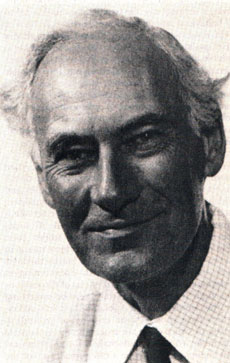
1.3 From a utilitarian perspective, the central moral question is not whether Jim’s integrity is preserved, but whether his action leads to the best possible outcome in terms of human welfare. If Jim refuses to act, nineteen innocent people will be killed. If he acts, only one person dies. The utilitarian might argue that while Jim’s discomfort and moral anguish are real and significant, they do not outweigh the lives of eighteen additional people. As Smart puts it, “the rightness or wrongness of an action depends only on the total goodness or badness of its consequences” (p. 6). In this light, Jim’s personal moral convictions, while important, cannot override the overwhelming moral weight of saving many lives.
1.4 Moreover, utilitarians might challenge the idea that integrity should be treated as an inviolable moral constraint. They could argue that integrity, like any other moral value, must be assessed in terms of its consequences. If maintaining one’s integrity leads to greater harm, then it is not morally justified. As Smart notes, “there is no inconsistency whatever in an act-utilitarian’s schooling himself to act, in normal circumstances, habitually and in accordance with stereotyped rules,” but when those rules conflict with the greater good, they must be overridden (p. 40). In this view, integrity is not a trump card but a useful disposition—valuable only insofar as it tends to promote good outcomes.
1.5 Finally, utilitarians might argue that Williams’ concern about treating individuals as mere instruments of utility is based on a misunderstanding. The utilitarian does not disregard the individual; rather, they include everyone’s interests equally in the moral calculation. The person Jim is asked to shoot is not being treated as a means to an end in a narrow sense, but as one of many whose welfare must be considered. The tragic nature of the choice does not invalidate the moral reasoning behind it. As Smart suggests, “the utilitarian’s ultimate moral principle… expresses the sentiment not of altruism but of benevolence, the agent counting himself neither more nor less than any other person” (p. 30).
2. Problems with calculation (including which beings to include)
2.1 Another major issue concerns the practical difficulties of calculating utility. Smart acknowledges that utilitarianism relies on our ability to predict and compare the consequences of actions, yet this is often fraught with uncertainty. He writes, “we cannot say with certainty what would be the various total situations which could result from our actions,” and even if we could, assigning numerical values to happiness or suffering remains deeply problematic. Furthermore, there is the question of which beings to include in the moral calculus—should we consider only humans, or all sentient beings? Smart leans towards the latter, but this broad scope only complicates the already difficult task of measuring and comparing well-being across diverse lives and experiences.
2.2 Smart in Utilitarianism: For and Against—would begin by acknowledging the challenge, but argue that this is not a fatal flaw in the theory. Rather, it reflects the complexity of moral life itself. Smart concedes that “we cannot say with certainty what would be the various total situations which could result from our actions,” but he does not see this as a reason to abandon utilitarianism. Instead, he suggests that we should aim to act in ways that are likely to produce the best outcomes based on the best available evidence. In other words, utilitarianism is a guide to rational moral decision-making under uncertainty, not a demand for omniscience.
2.3 Utilitarians might argue that all moral theories must deal with uncertainty and incomplete information. Deontological theories, for example, also require us to interpret duties and rules in complex and ambiguous situations. The fact that utilitarianism makes this challenge explicit is a strength rather than a weakness. It encourages moral agents to think carefully about the likely consequences of their actions, to gather relevant information, and to revise their judgments in light of new evidence. As Smart puts it, “it is rational to perform the action which is on the available evidence the one which will produce the best results” (p. 43).
2.4 Regarding the question of which beings to include in the moral calculus, utilitarians would argue that the inclusion of all sentient beings is a moral advance, not a complication. The principle of impartiality—treating like cases alike—requires that we consider the interests of all beings capable of suffering or enjoyment. While this broadens the scope of moral concern, it also aligns with our growing understanding of animal sentience and the ethical implications of our actions on non-human life. Smart acknowledges that this makes the task of moral reasoning more demanding, but he sees it as a necessary consequence of taking morality seriously.
2.5 Finally, utilitarians might respond that while precise measurement of happiness is difficult, this does not prevent us from making reasonable moral judgments. We often make comparative assessments of well-being in everyday life—such as choosing public policies, allocating resources, or resolving conflicts—without needing exact calculations. Utilitarianism provides a flexible and principled framework for guiding such decisions, even if the calculations are rough or incomplete. As Smart notes, “approximate agreement about ultimate ends is often quite enough for rational and co-operative moral discourse” (p. 24).
3. Issues around partiality
3.1 Utilitarianism also demands strict impartiality, treating each person’s happiness as equally important. While this might seem morally commendable, Williams argues that it clashes with the reality of human life, where people are naturally partial to their own projects, relationships, and values. He contends that utilitarianism “alienates one from one’s moral feelings,” and that it cannot make sense of the deep attachments and commitments that give life meaning. In the case of George, who is offered a job in chemical warfare research, Williams shows how utilitarianism would require him to act against his own moral convictions for the sake of a marginally better outcome, thereby undermining his sense of self and moral integrity.
3.2 A utilitarian response to the criticism concerning impartiality would begin by reaffirming that impartiality is not a flaw but a core moral strength of the theory. Utilitarianism insists that “each person’s happiness counts equally,” as Smart puts it, and this reflects a commitment to fairness and universal moral concern. From this perspective, the fact that utilitarianism does not give special moral weight to one’s own projects or relationships is not a defect, but a principled rejection of moral egoism or favouritism. The theory challenges us to rise above personal bias and consider the well-being of all affected parties, not just those closest to us.
3.3 In response to Bernard Williams’ example of George, who is offered a job in chemical warfare research, a utilitarian might argue that George’s personal discomfort or moral aversion cannot outweigh the broader consequences of his decision. If George refuses the job, someone else—less morally scrupulous—will take it and potentially cause greater harm. From a utilitarian standpoint, George’s integrity is not being dismissed, but rather weighed alongside the likely outcomes of his action. As Smart explains, “the utilitarian’s ultimate moral principle…expresses the sentiment not of altruism but of benevolence, the agent counting himself neither more nor less than any other person” (p. 30). This means that George’s moral feelings matter, but they do not automatically override the consequences for others.
3.4 Moreover, utilitarians can argue that personal commitments and relationships are not excluded from moral consideration—they are simply not given automatic priority. In fact, utilitarianism often supports the cultivation of strong personal bonds, since such relationships tend to promote happiness and social stability. The theory does not require people to abandon their loved ones or deepest values, but it does ask them to consider whether their actions serve the greater good. In many cases, acting on one’s commitments will align with utilitarian aims. When they do not, the theory challenges us to reflect critically on whether our attachments are morally justified.
3.5 Finally, utilitarians might argue that Williams’ concern about alienation from one’s moral feelings assumes that those feelings are always reliable guides to right action. But moral feelings, like any other human emotions, can be shaped by culture, habit, or self-interest. Utilitarianism encourages us to examine our intuitions and ask whether they lead to good outcomes. If they do, they are to be respected and cultivated. If they do not, then perhaps they should be revised. As Smart notes, “the ordinary man is frequently irrational in his moral thinking,” and utilitarianism offers a way to clarify and improve our moral reasoning (p. 9).
4. Whether utilitarianism ignores both the moral integrity and the intentions of the individual
4.1 Finally, utilitarianism is criticised for its disregard of intentions and moral character. It evaluates actions solely by their consequences, regardless of the motives behind them. This leads to morally counterintuitive conclusions, such as praising someone who accidentally does good or condemning someone who, with good intentions, causes harm. Williams argues that this focus on outcomes fails to capture the moral significance of acting from principle or conviction. As he puts it, “utilitarianism cannot hope to make sense, at any serious level, of integrity.” In doing so, it strips moral life of its depth and complexity, offering a simplified and ultimately inadequate account of ethical decision-making.
4.2 A utilitarian response to the criticism that it ignores moral integrity and intentions would begin by clarifying that while utilitarianism evaluates actions by their consequences, this does not mean it is indifferent to motives or character. Rather, it sees these as important insofar as they influence outcomes. Good intentions, for example, are often conducive to good consequences, and a person of virtuous character is more likely to act in ways that promote well-being. As Smart notes, “a good motive is one which generally results in beneficent actions” (p. 44), and a good agent is someone who tends to act in ways that increase happiness. Thus, utilitarianism can accommodate the moral relevance of intentions, but it does so within a consequentialist framework.
4.3 In response to Bernard Williams’ claim that utilitarianism cannot make sense of integrity, the utilitarian might argue that integrity is not an end in itself, but a valuable trait because of its effects. A person with integrity is often trustworthy, consistent, and morally serious—qualities that tend to produce better outcomes in the long run. However, if maintaining one’s integrity in a particular case leads to greater harm, then it may be morally right to set it aside. From this perspective, integrity is not being dismissed, but weighed alongside other morally relevant considerations. As Smart puts it, “the right action is the one which produces better results than any alternative action,” and this includes considering the broader social effects of acting from principle (p. 43).
4.4 Utilitarians would also challenge the idea that moral theories should always align with our intuitions about integrity or moral depth. These intuitions, they argue, are shaped by cultural norms, emotional responses, and evolutionary pressures, and are not always reliable guides to right action. Utilitarianism offers a systematic and impartial method for evaluating actions, one that seeks to reduce suffering and promote well-being, even when this conflicts with our immediate moral feelings. As Smart writes, “the ordinary man is frequently irrational in his moral thinking,” and utilitarianism aims to bring clarity and consistency to our ethical judgments (p. 9).
4.5 Finally, utilitarians might argue that the focus on outcomes does not trivialise moral life, but rather reflects its seriousness. The consequences of our actions matter deeply, especially when they affect the lives and happiness of others. While it may seem harsh to judge someone who acts with good intentions but causes harm, utilitarianism insists that we take responsibility for the real-world effects of what we do. In this way, it encourages moral agents to be thoughtful, informed, and attentive to the broader impact of their choices—qualities that are themselves part of a morally rich and responsible life.